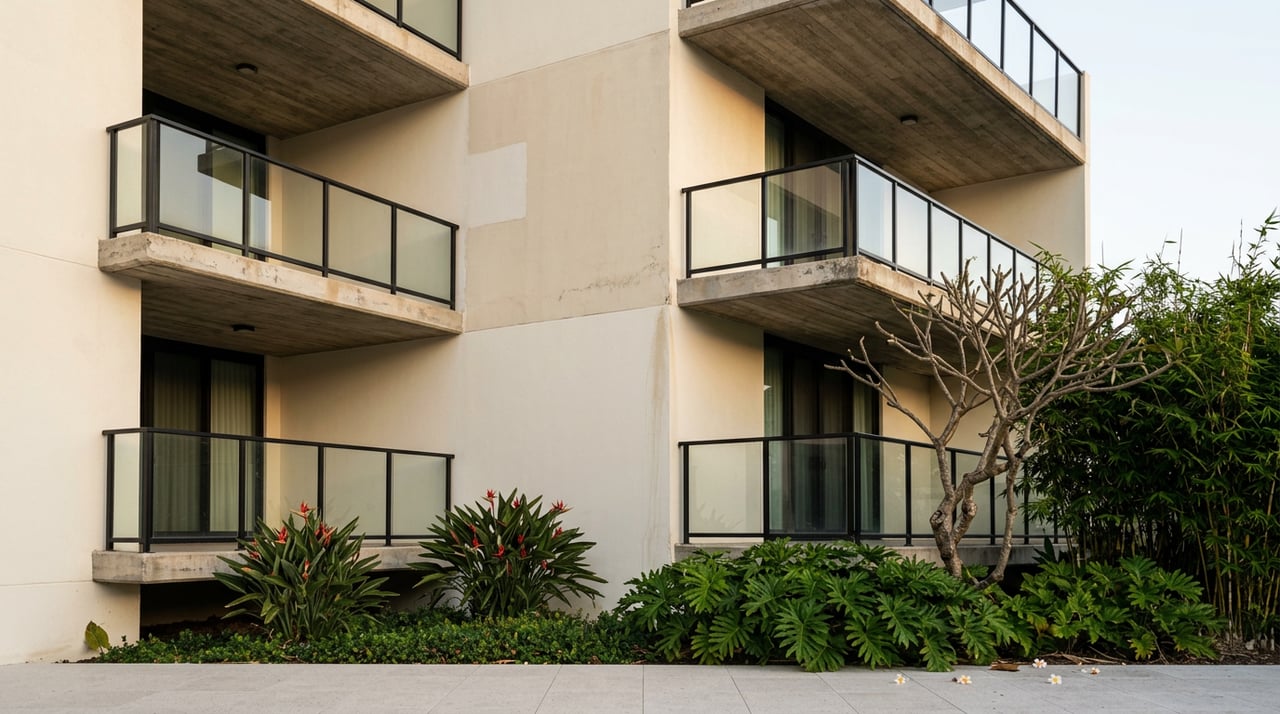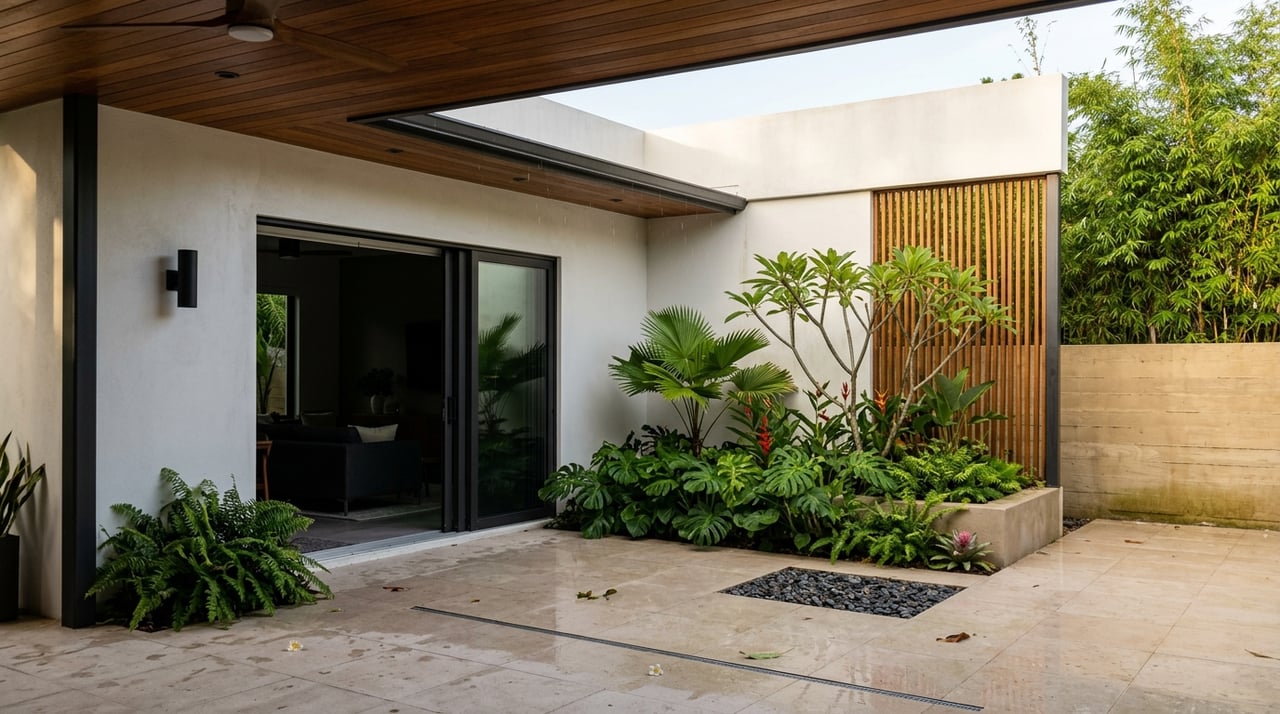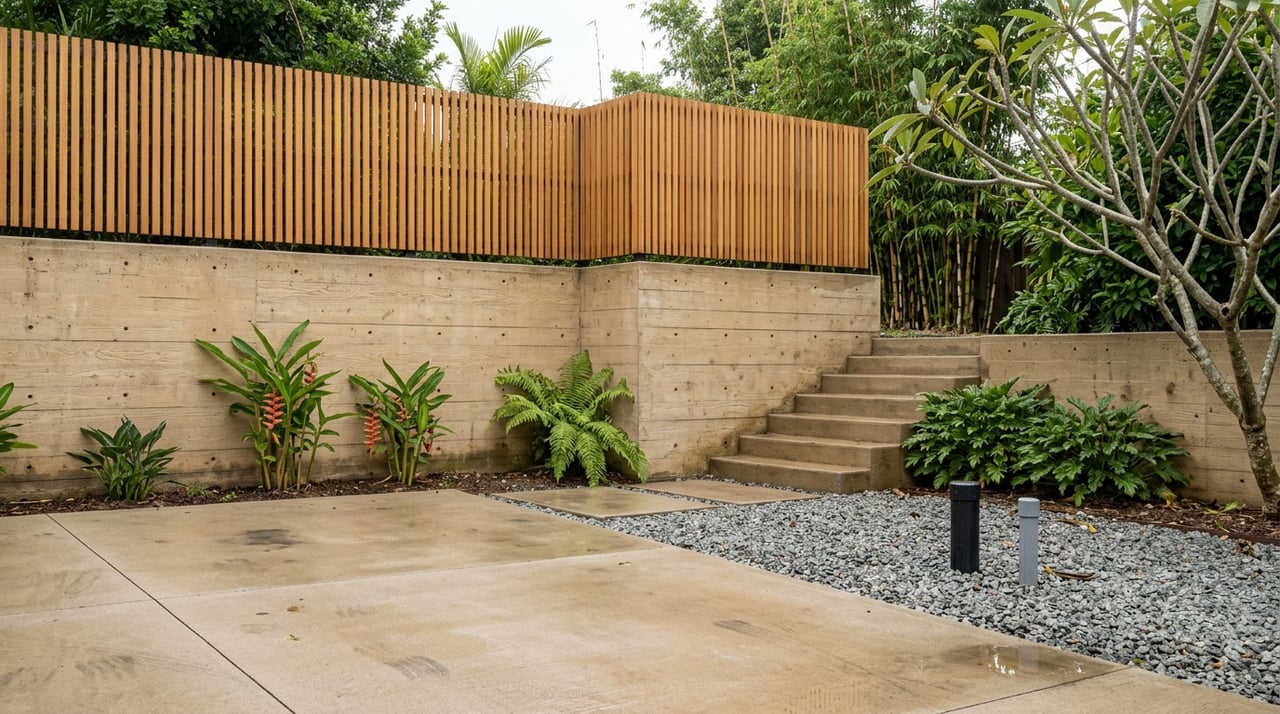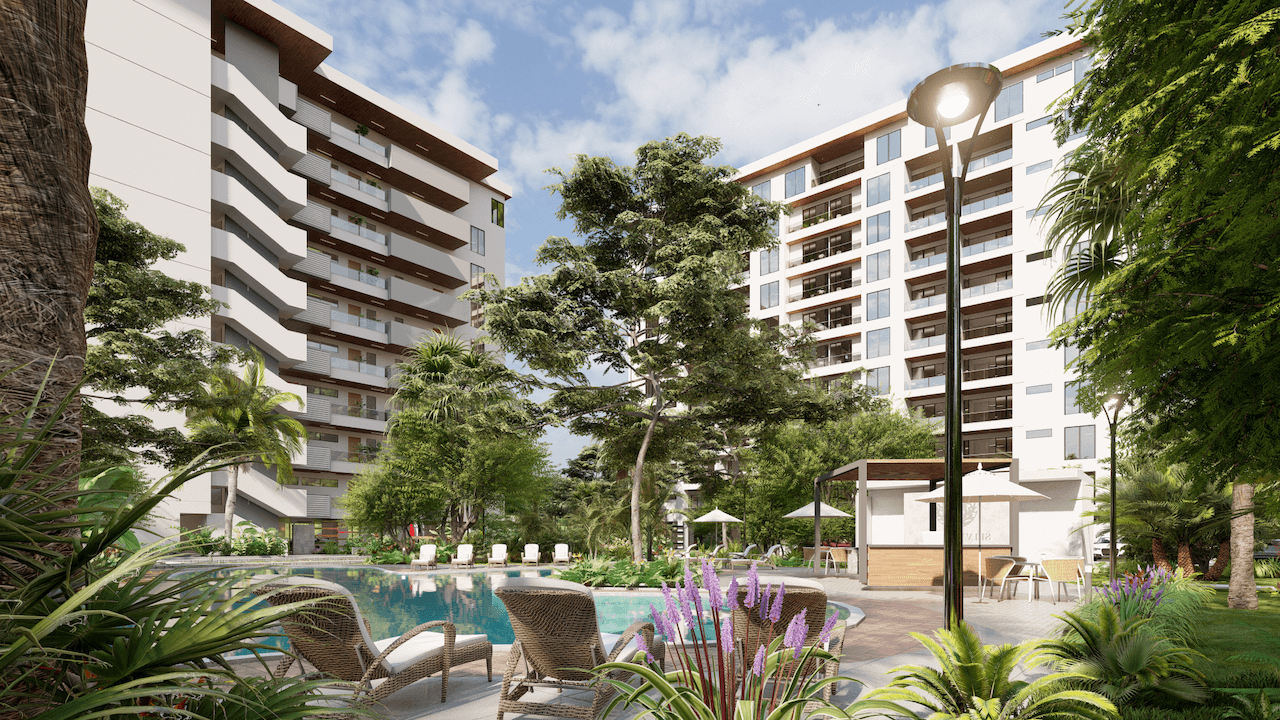
A locked gate, a guard on rotation, a shared pool with the same turquoise tile. Two developments a few minutes apart in Jacó can present that same package to a buyer touring on a Tuesday afternoon. What the tour does not show is which legal regime sits underneath the amenities, and that difference decides something far more consequential than curb appeal: whether the community can actually make a delinquent owner pay their share.
Costa Rica draws a sharp line between a condominio, registered under the Condominium Law (Law No. 7933), and a residencial, a gated development built from individually titled lots that never went through condominium registration. The two can look interchangeable on a listing sheet. They are not interchangeable in a courtroom. In a true condominium, unpaid HOA dues attach to the unit as a legal lien, and the administrator can ultimately foreclose on a chronically delinquent owner. In a residencial, compliance with the bylaws is voluntary. Costa Rican legal commentary treats forced enforcement of residencial dues as unconstitutional, since it would infringe on the individually titled owner's property rights under the national constitution. A board can send invoices. It cannot lien the property, and it cannot compel payment through the courts the way a registered condominium can.
That gap does not stay theoretical once you own inside one of these communities. It shows up in your monthly statement, your reserve fund, and eventually your resale conversation.
Two Words, Two Enforcement Regimes
The Condominium Law creates something specific when a developer registers under it: each unit becomes a finca filial, its own sub-property inscribed in the National Registry, tied to a constitutive deed and a recorded set of bylaws (the reglamento). Buying a finca filial means agreeing, as a term of the transfer deed itself, to those bylaws. That agreement is what gives the HOA administrator legal teeth. Unpaid fees become a preferential lien against the unit, and the law lets that lien follow the property even through a foreclosure sale.
A residencial skips that registration step. The individual lots are titled on their own, and any HOA that governs the shared roads, entry gate, or common green space exists by informal agreement among owners rather than by statute. Bylaws can look identical to a condominium's on paper. The legal weight behind them is not.
This is not a distinction a buyer can eyeball from a brochure. The word "residencial" sometimes shows up plainly in a development's name, and sometimes does not. One current Jacó-area listing describes a property as a "luxury condo residencial community," folding both terms into a single marketing phrase, which tells you more about how loosely the words get used in sales copy than about the underlying legal status of that specific development. The only way to know for certain is to ask for the finca filial number and check the registration directly.
What the Difference Actually Buys
| Condominio (Law 7933) | Residencial | |
|---|---|---|
| Registration | Filed with the National Registry, each unit gets its own finca filial | Lots titled individually, no condominium filing |
| Bylaws | Recorded reglamento, binding at the time of transfer | Informal agreement among owners |
| Unpaid dues | Legal lien on the unit, enforceable through the courts | No legal mechanism to compel payment |
| Worst case for non-payment | Foreclosure by the administrator | Board can ask, cannot force |
| Common in Jacó | High-rise buildings like Croc's Casino Resort, horizontal developments such as Villas Paraíso | Gated clusters inside larger resorts, including Residencial Sotavento within the Punta Leona development |
Jacó is a useful place to see both regimes side by side because it has grown in both directions at once. High-rise construction along the beach strip and inside resort footprints tends to run through the condominium regime, since vertical buildings with stacked units are exactly what Law 7933 was written to formalize. Horizontal gated clusters, the kind marketed as boutique villa communities inside a larger master-planned resort, more often sit in residencial territory, sometimes explicitly labeled that way and sometimes not.
The Incentive Problem Nobody Puts in the Brochure
Here is the part that matters more than the legal label itself. In a residencial, the inability to force payment does not make the underlying costs disappear. The gate still needs a guard. The road still needs grading after rainy season. Someone still has to pay the electric bill for the entry lighting. What changes is who ends up covering it when a neighbor decides their monthly contribution is optional.
Once an owner understands that a residencial's board has no legal recourse against them, the honest incentive is to stop paying and let everyone else absorb the shortfall. Most owners do not act on that incentive, and most residenciales function fine for years. But the ones that do slide into arrears do it slowly, one non-paying unit at a time, and the paying owners either raise their own contributions to cover the gap or watch the shared amenities degrade. A structurally sound legal framework does not eliminate that risk in a condominium either, but it gives the remaining owners a real remedy: a lien, and if it comes to that, a foreclosure sale that puts the unit back into the hands of someone who will pay.
That mechanism is exactly why a due diligence report for a residencial purchase should include a look at the HOA's financial statements with more scrutiny than a condominium purchase requires. A condominium with a shaky reserve fund at least has legal tools to fix the shortfall going forward. A residencial with a shaky reserve fund is telling you something about the community's actual habits, not just its current bank balance, because there is no legal backstop if those habits get worse.
What to Ask Before You Sign
A few questions, asked before an offer goes in, do most of the work:
- What is the finca filial number for this specific unit, and is the development registered as a condominium under Law 7933? Your attorney can confirm this directly through the Registro Nacional.
- If it is a residencial, what percentage of owners are current on HOA contributions, and how does the board handle a shortfall when someone stops paying?
- Ask to see the last two years of HOA or COA financial statements, not just the current budget. A pattern of special assessments is a more honest signal than a single clean year.
- If you are buying an existing unit rather than new construction, confirm whether any unpaid dues attach to the property itself. In a registered condominium, arrears typically transfer with the unit regardless of who caused them.
- Read the reglamento or informal bylaws in full, not the summary version a listing agent hands over. The wording on rental restrictions, pet policies, and short-term rental approval can matter as much to your plans as the enforcement question does.
None of this replaces a conversation with a Costa Rican attorney who can pull the actual registration and confirm which regime governs a specific address. The official text of the Condominium Law is a matter of public record, and the law itself is worth having your attorney reference directly rather than relying on secondhand summaries, including this one.
Frequently Asked Questions
Does this distinction only apply to apartment-style condos? No. Law 7933 covers horizontal developments too, including detached single-family homes and townhouses inside a gated perimeter. The finca filial concept applies whether the unit is a high-rise apartment or a standalone house on its own lot within a registered condominium.
Can a residencial ever convert to a registered condominium later? In principle a developer or an owners' group could pursue registration, but it requires the same constitutive deed, approved plans, and Registry filing a new development would need. It is not something that happens informally through a board vote.
If I buy in a residencial with strong current finances, does the enforcement gap still matter? It matters less today and more over a longer hold. A financially healthy residencial can run smoothly for years on voluntary compliance. The risk grows as ownership turns over and new buyers who never agreed informally to the community's norms move in with less social pressure to keep paying.
Who actually checks the finca filial and registration status? Your attorney, as part of standard due diligence, should confirm this directly with the National Registry before you sign a purchase agreement. It is a routine step, but it only happens if someone asks for it specifically rather than assuming a gated property is automatically a registered condominium.
Buying inside a gate in Jacó is still one of the more straightforward property decisions in the Southern Pacific Zone, but straightforward is not the same as automatic. Knowing which legal regime you are buying into changes what you should expect from your HOA statement five years from now, not just what the listing photos show today.
If you are comparing gated properties in Jacó and want a clear read on which developments run as registered condominiums versus residenciales, Blue Zone Realty International can walk through the specifics with you. Schedule a private consultation.