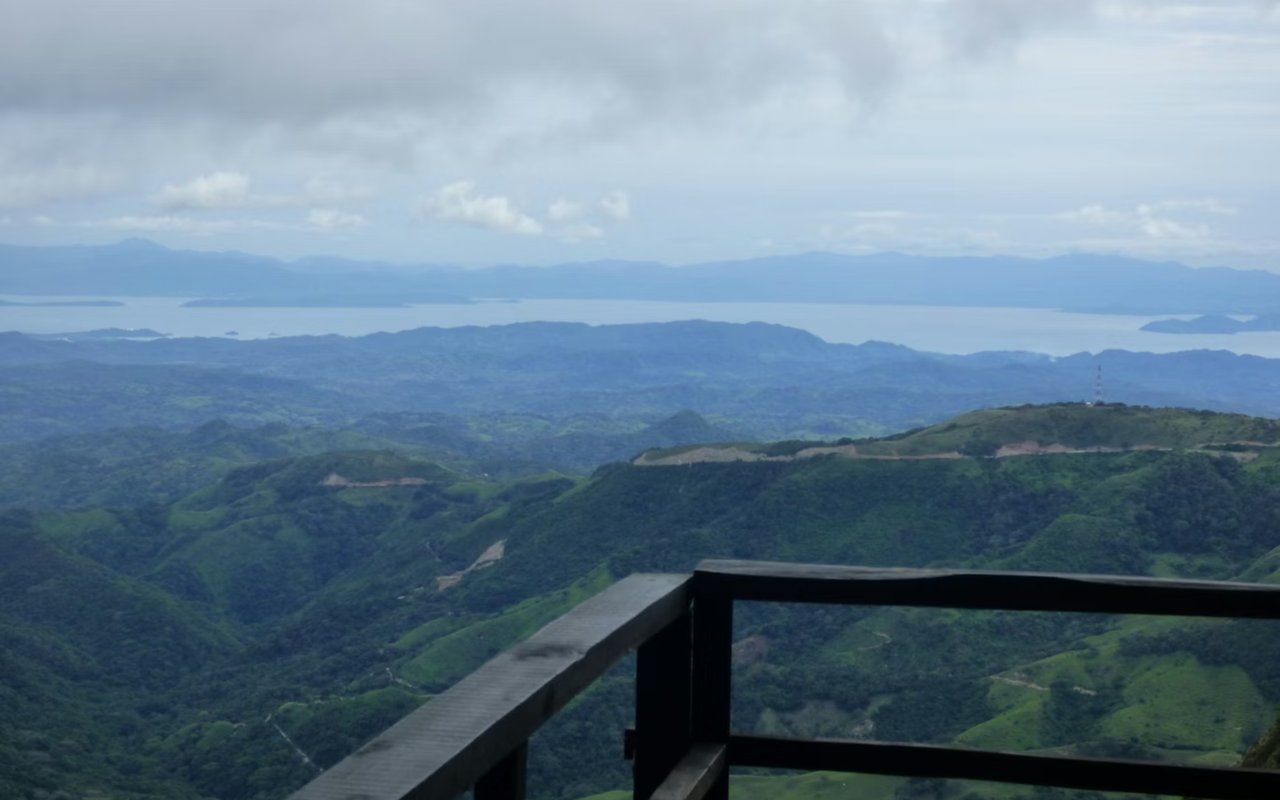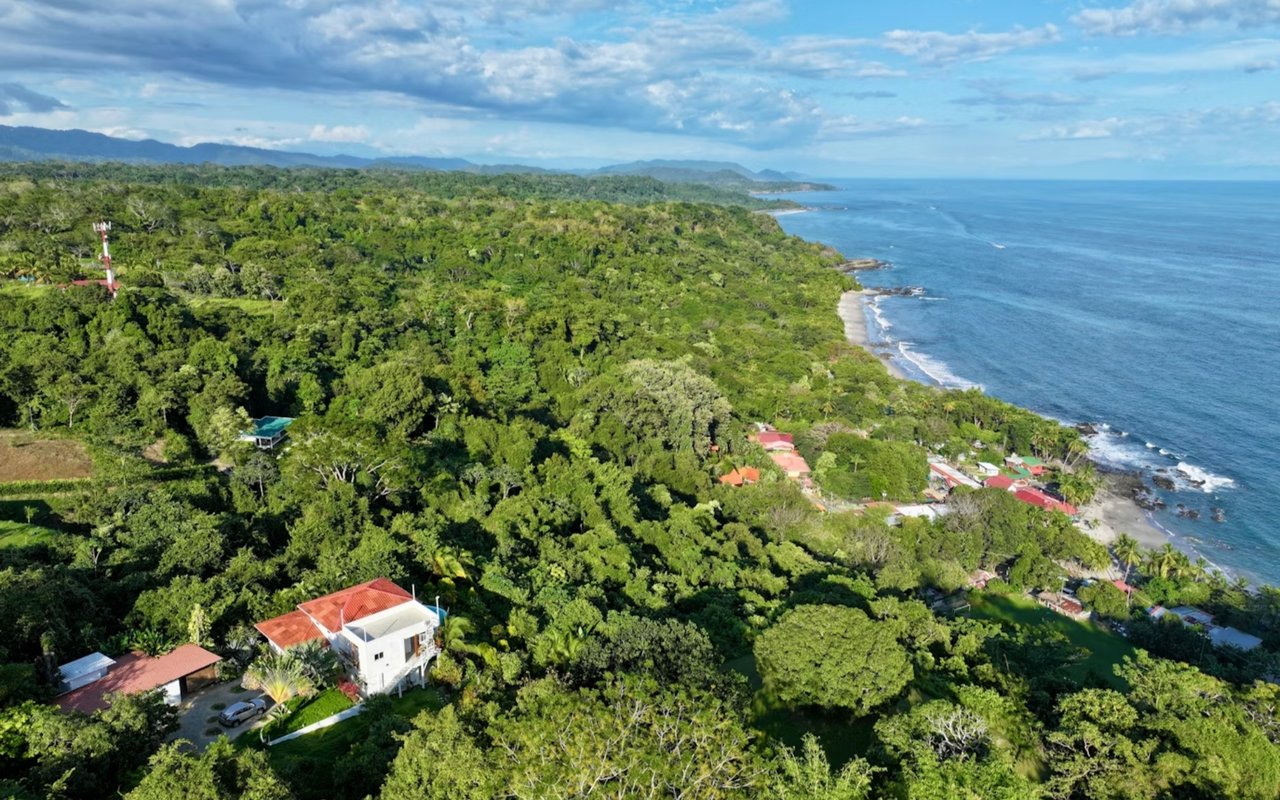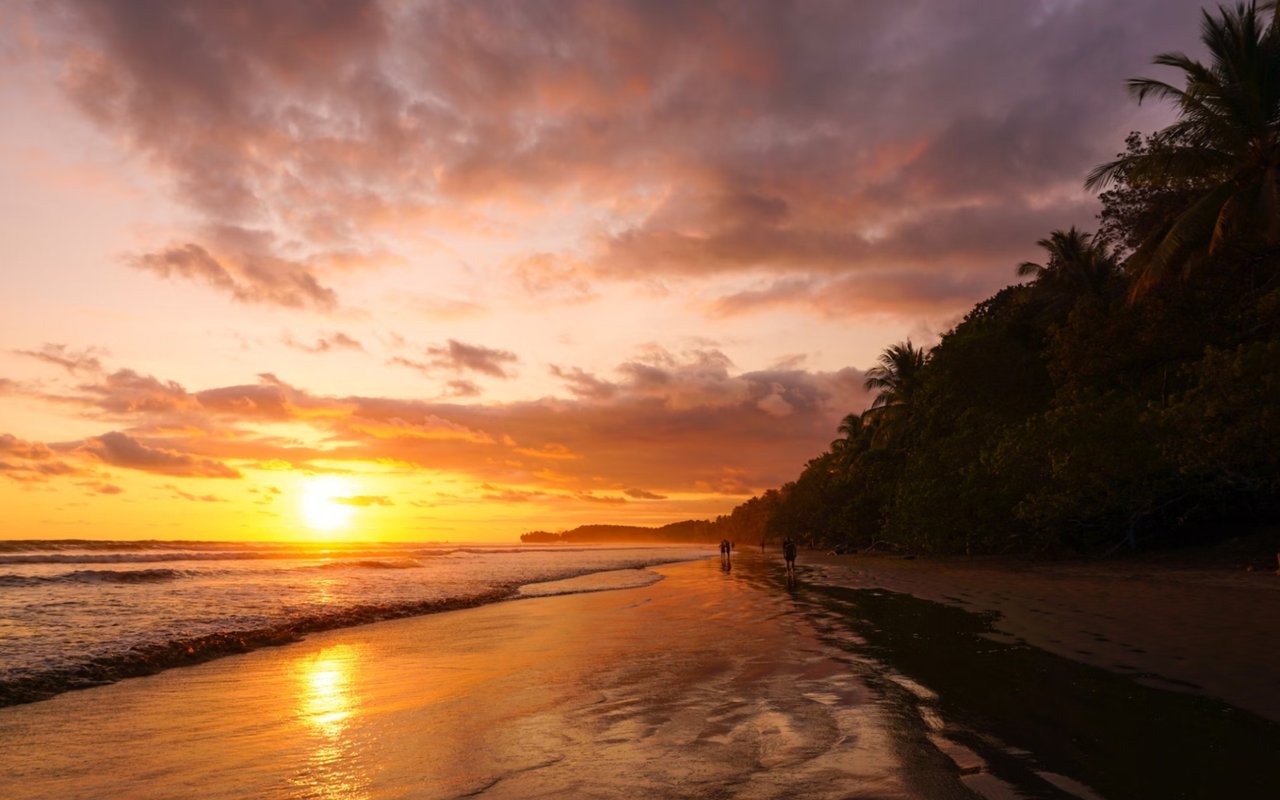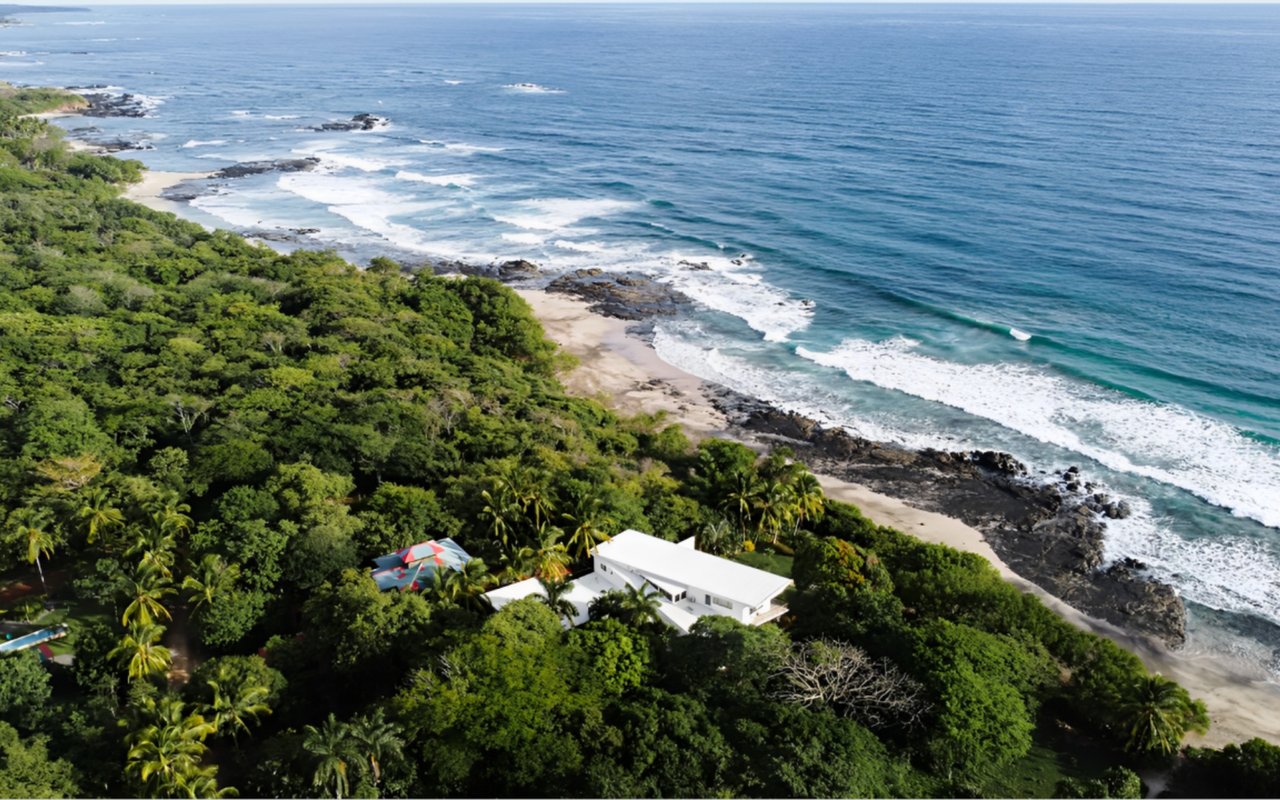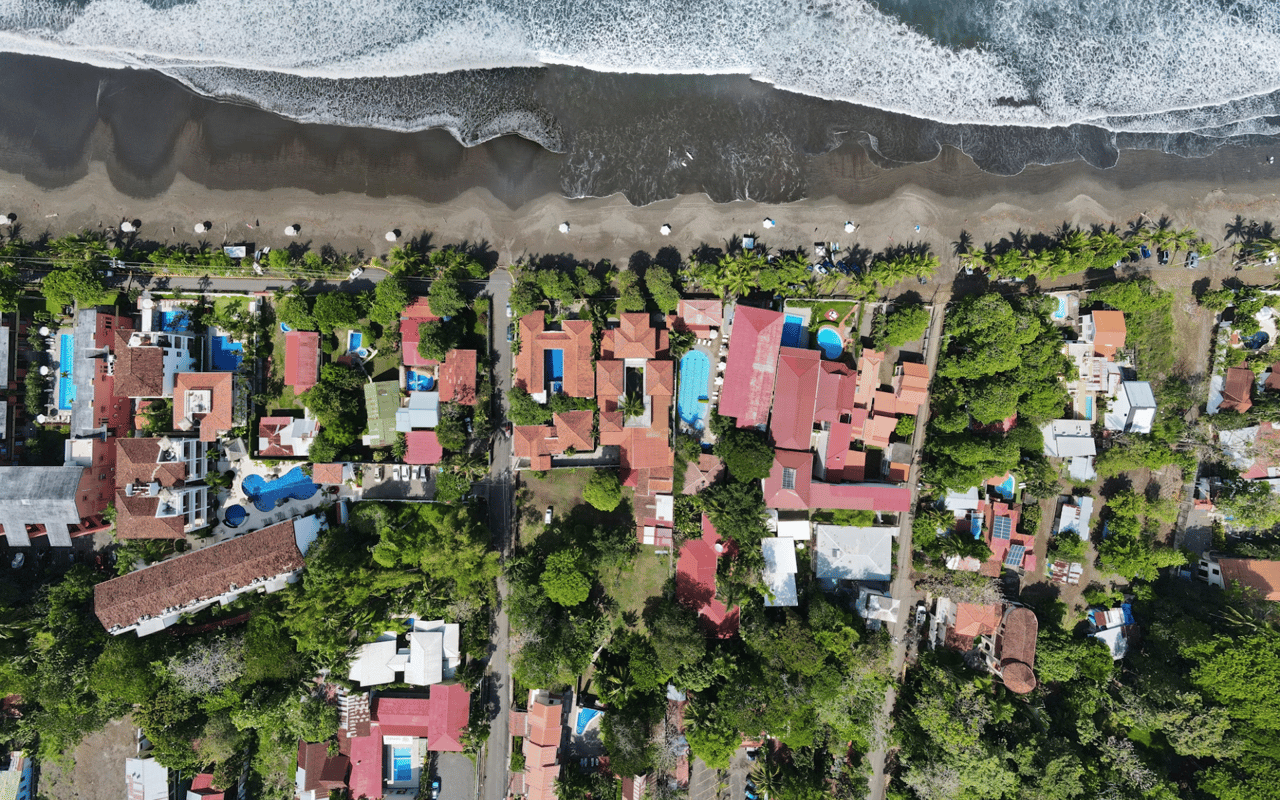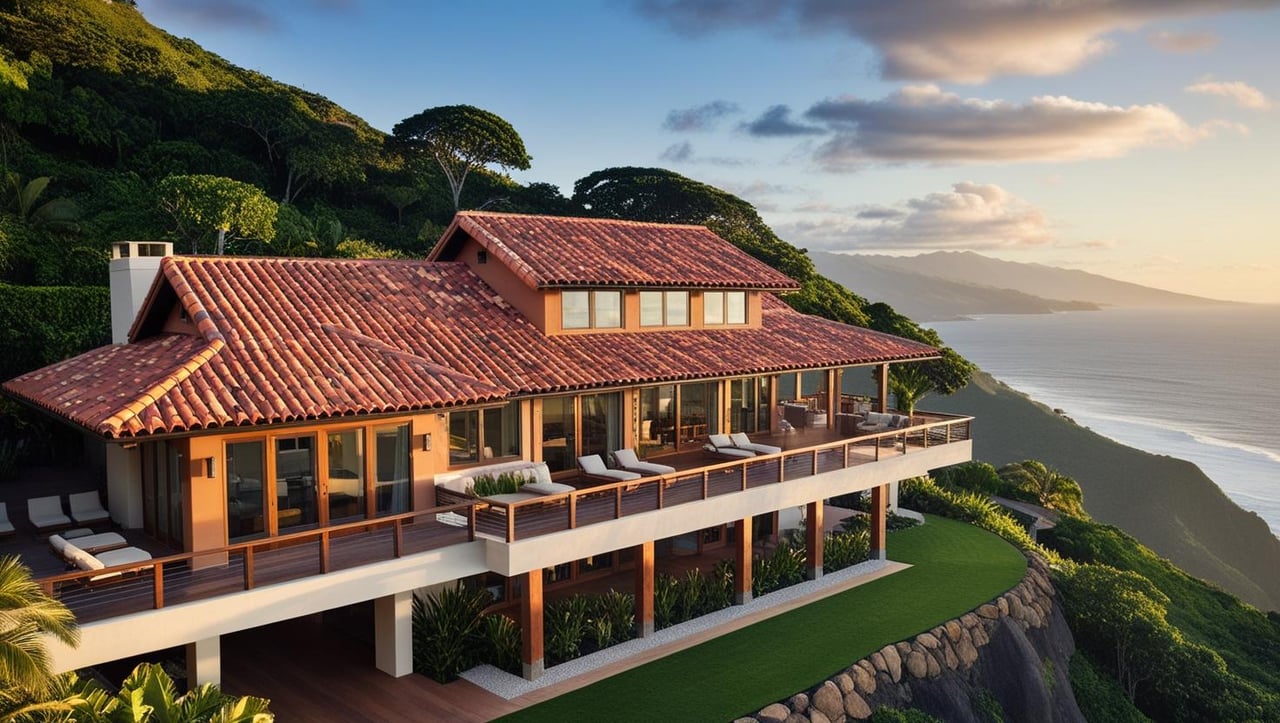
Two hillside lots outside Dominical can sit ten minutes apart, carry similar asking prices, and look almost identical in photos. Same red dirt road, same wall of green climbing toward a strip of ocean. Most buyers comparing them make the same assumption without saying it out loud: the lot closer to town, lower on the hill, nearer the highway and the existing infrastructure, is the safer bet. The one further up, deeper into Platanillo or Tinamastes, feels like the gamble.
Talk to the people who actually drill wells in this corridor and you get a different answer. The lower ground near Dominical is often the harder place to find water, not the easier one. The paper that decides whether either lot can ever get a building permit does not care about the view. It cares about a document called the carta de disponibilidad de agua, the water availability letter, and that document has its own clock running independent of the land underneath it.
What the letter actually certifies
A water availability letter is not proof that water exists somewhere near your property. It is a specific, legally binding statement from a specific provider, either the national utility AyA or a local ASADA (Asociación Administradora de Sistemas de Acueductos y Alcantarillados Comunales), confirming that a defined water source has the legal and physical capacity to serve your parcel. Costa Rica's municipalities will not issue a building permit without one, no matter how obviously wet the land looks or how confidently a seller describes the tap that already runs to the property.
ASADAs exist specifically because AyA's own infrastructure does not reach most rural and semi-rural areas of the country, including the hills above Dominical. These are community-run water boards, often staffed partly by local volunteers, operating under delegation from AyA and regulated alongside it by ARESEP. That structure works well in a lot of the Southern Zone. It also means the letter you need is only as good as the specific aqueduct behind it, and every aqueduct in this region has a finite capacity.
A working connection on a seller's property, a visible tank, a neighbor's pipe running past your lot line, none of that substitutes for the letter itself. If it does not exist yet, requesting it needs to happen during due diligence, while your deposit is still refundable, not after you have already committed.
The elevation paradox specific to this corridor
Here is the part that runs against intuition. Jerry Werth, who runs Pura Vida Drilling and has worked wells throughout Costa Rica's South Pacific zone for years, describes water access around Uvita and Dominical as inconsistent along certain ridge lines, with dry wells turning up in places buyers would not expect. But the pattern he points to for the ground right around Dominical is the more counterintuitive one: the lower you go near town, the worse the water gets, because the rock at lower elevation carries clay lenses through its fractures that choke off flow. Climb higher into the hills and the formation changes. Higher ground, in his account, is generally the better bet.
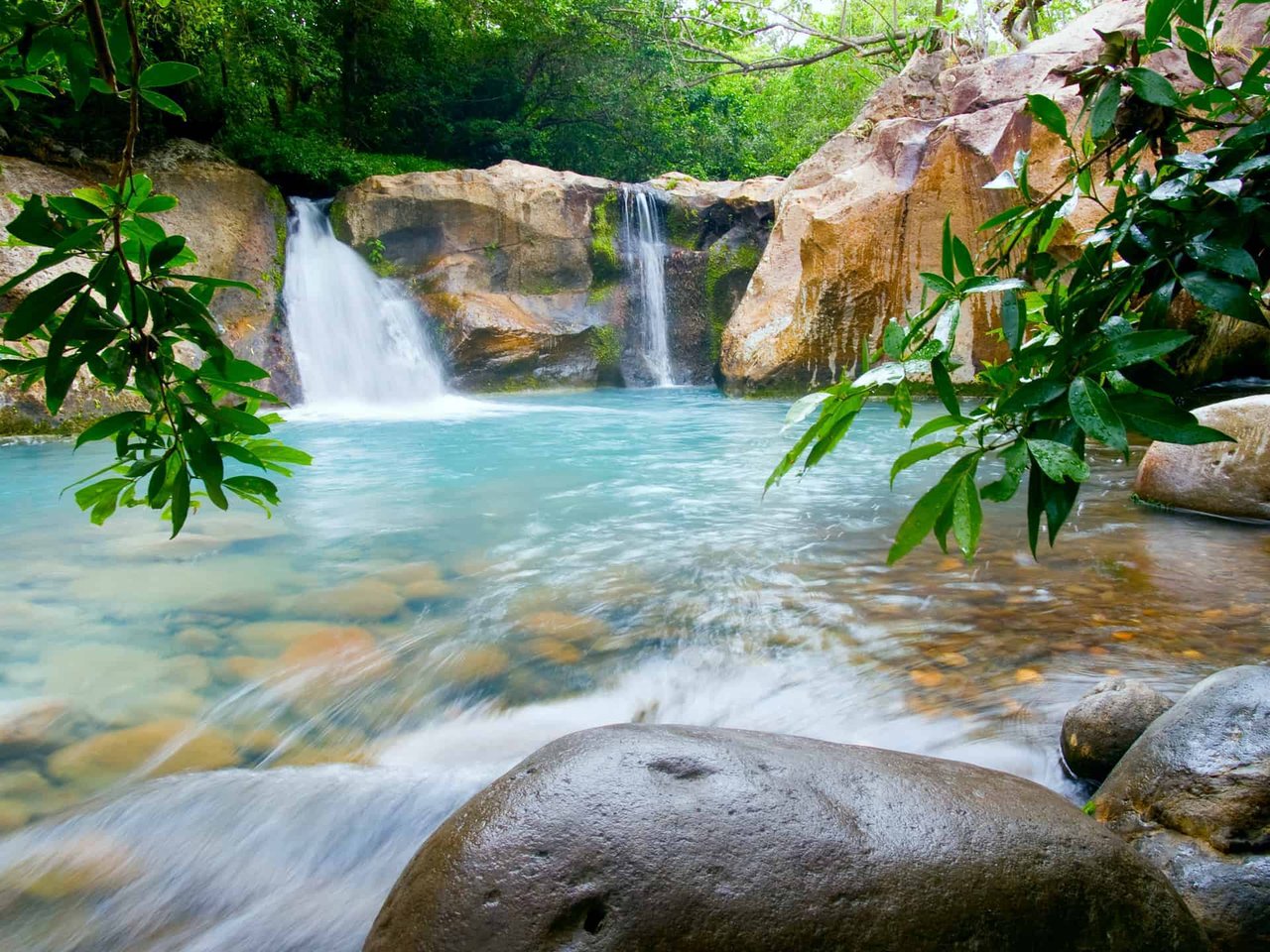
That inversion matters most for the exact towns this corridor is built around. Platanillo and Tinamastes sit roughly 2,500 feet up, about 20 minutes from Dominical along the paved mountain highway toward San Isidro, in the district of Barú within the canton of Pérez Zeledón. The area around the Diamante Valley, named for its roughly 600-foot Diamante Waterfall, and the nearby Nauyaca Waterfall draw much of the buyer interest in these hills. Lagunas sits in the same general belt. None of this is marginal or hard to reach. It is a 15 to 20 minute paved drive from the beach, and it is also, by the drilling industry's own account, often the more reliable water ground.
None of that means every ridge lot is safe or every lower lot is doomed. It means the assumption most buyers walk in with, that proximity to Dominical's center equals lower risk, deserves to be checked rather than trusted.
The letter has its own expiration date
Even a strong water source does not settle the question permanently. Water availability letters issued by AyA, an ASADA, or a municipality are typically valid for six months to a year from the date of issuance, and extensions beyond that are not automatic. They depend on whether the issuing system still has capacity to spare when you ask.
There is also a distinction worth understanding before you rely on any letter a seller hands you. A water availability letter confirms water exists for your property today. A water capacity letter is a different, weaker document that only signals a system might be able to serve your lot once certain infrastructure work gets completed, work that frequently falls to the property owner to fund. Reading the letter's actual language, not just its name, is the only way to know which one you are holding.
This is also why buying raw land with plans to build "someday" carries a specific risk in this market that does not apply to a finished home. A valid letter today does not guarantee a valid letter in five or ten years. Since a 2014 regulatory change, even lots inside developments with shared community water systems need their own individual letter, not just proof the development has water somewhere.
Growth is already straining the systems nearby
The pressure on these community water boards is not hypothetical. The ASADA that serves Uvita and Bahía, just down the coast from Dominical, supplies close to 3,000 people through an aqueduct that was officially inaugurated in 2006, and the region has spent years working through infrastructure damage and capacity strain following heavy rainy seasons. Growth along the whole Costa Ballena to Dominical corridor puts steady pressure on systems that were sized for a much smaller population, and that pressure shows up exactly where you would expect: in moratoriums on new meters, in slower letter renewals, and in ASADAs that simply run out of allocated capacity before every lot in a subdivision gets served.
Drilling your own well sidesteps the ASADA question but introduces its own costs and timeline. A hand-dug well runs in the range of $500 per meter, and a formal water concession, the legal right to draw from a well, spring, or river, typically costs somewhere between $2,000 and $5,000 and can take one to two years to obtain. That timeline alone should factor into any offer on land that does not already have a valid letter in hand.
What this changes about your due diligence order
For a hillside lot in Platanillo, Tinamastes, Lagunas, or anywhere in the Diamante Valley, the sequence matters as much as the checklist itself.
- Ask for the specific letter type before you remove any contingencies, and confirm in writing whether it comes from AyA, an ASADA, or a private well concession.
- Check the issuance date. If it is close to expiring, factor the renewal uncertainty into your offer, not into a surprise after closing.
- Ask the ASADA or AyA office directly whether a moratorium or capacity limit currently applies to your specific zone, not just the general area.
- If the lot relies on a well that has not been drilled yet, get an independent assessment of likely yield for that exact parcel rather than relying on a neighbor's experience.
- If you are buying raw land with no near-term building plan, understand that the letter you secure now may need to be renewed, at a cost, before you ever break ground.
A few questions worth asking directly
Does a working tap on the property count as legal water? No. A physical connection is not the same as a current, valid letter naming your parcel and your intended use.
What happens if my letter expires before I finish building? You will need to request a renewal, and approval depends on whether the system still has available capacity at that later date, not on your original approval.
Are all lots in Platanillo and Tinamastes equally favorable for water? No. The general pattern favors higher ground in this corridor, but water access is parcel-specific. A ridge location improves your odds. It does not replace verification.
Land in these hills carries real advantages, cooler temperatures, proximity to two of the Southern Zone's better-known waterfalls, and a shorter drive to the beach than the elevation would suggest. The water question is simply the one that deserves to be settled before the offer, not after.
If you are evaluating a specific parcel above Dominical and want a clear read on its water status before you move forward, Blue Zone Realty International can walk through what a given letter actually says and what it does not. Schedule a private consultation to start that review.