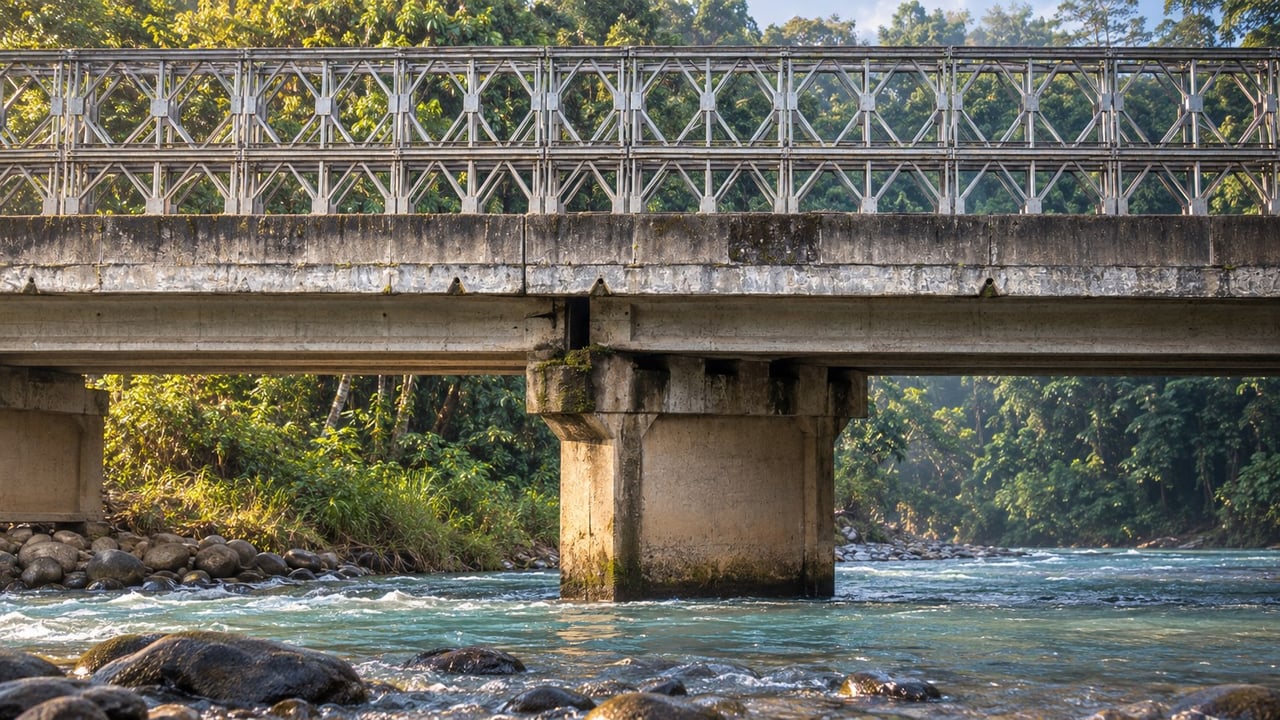
Late on the afternoon of Tuesday, August 6, 2024, a tractor-trailer hit the modular bridge over the Río Coronado. The impact lifted the entry beam on the side facing traffic from Punta Mala toward Cortés and damaged panels on the left side. Crews hauled replacement materials down from San José, and according to Periódico Mensaje the aim was to reopen by the end of Friday, August 9. La Nación reported that four panels and a beam were damaged and that the Costanera was closed between Uvita and Palmar Norte for those days.
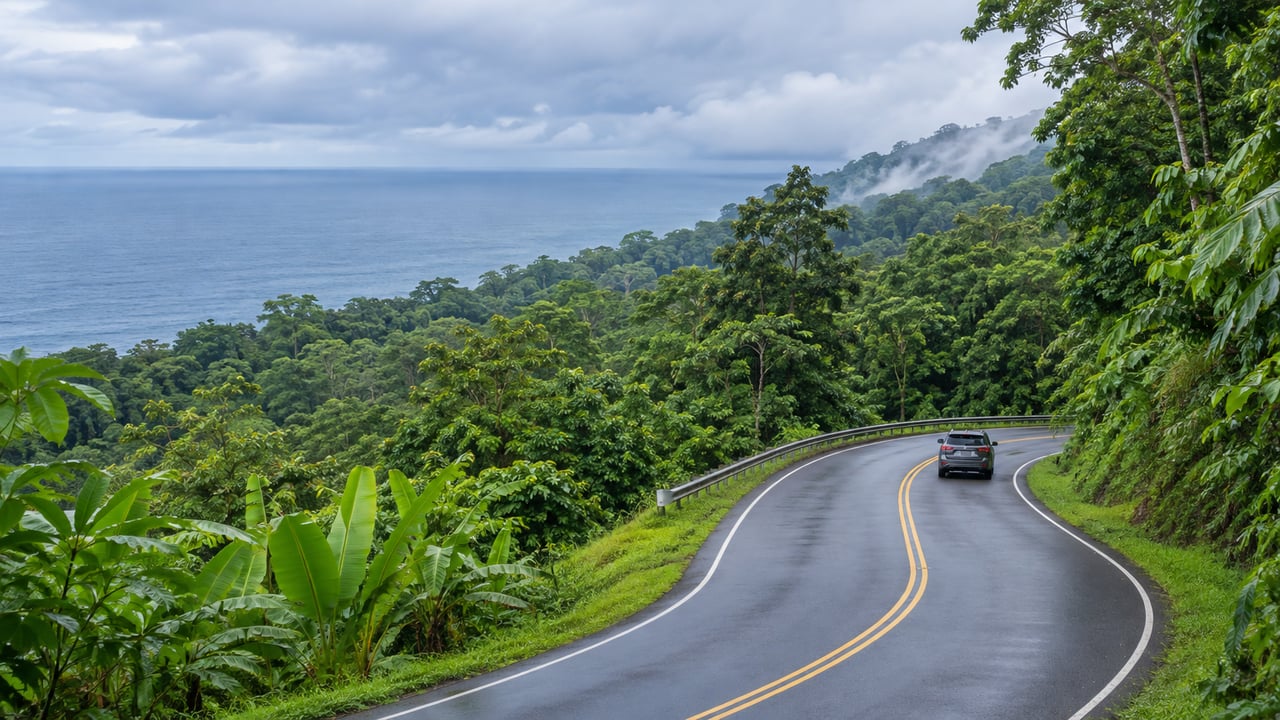
For anyone in Ojochal, that stretch of Ruta 34 is the way to hospital visits, municipal paperwork, bus connections and the big grocery run. One single-lane structure at Coronado de Osa, kilometer 179, can close all of it. MOPT and CONAVI are now replacing that bridge with a permanent two-lane one. MOPT's plan carries traffic over a second modular bridge while the old one is demolished, so the crossing stays the weak point it has been since 2020 until the new bridge opens.
Six years on a bridge meant for emergencies
The Bailey bridge was never supposed to last this long. In August 2020, heavy rain eroded a pier under the original Coronado bridge. Authorities closed the Costanera at kilometer 179 on a Saturday afternoon as a precaution. When La Nación reported the closure on August 16, 2020, no reopening date had been set. For a short time, drivers crossed the river on a ford. In September 2020, crews installed the modular Bailey bridge, which has carried traffic in both directions, one lane at a time, ever since.
Bailey bridges are built from prefabricated sections that can be put together quickly after a disaster, and the Tico Times described this one as the main link for people heading to the southern Pacific beaches and towns. Trucks have hit it more than once. Before the 2024 accident, a truck struck it in May 2023. Diario Extra reported on May 24 of that year that the road had been closed for about 36 hours before reopening.
Counting the original collapse, the Coronado crossing has closed this part of the Costanera three times in four years.
Where traffic goes when Coronado shuts
The detours are long because the Costanera has few alternatives on this stretch. During the 2024 closure, the published options were:
- Interamericana Sur: over the Cerro de la Muerte to Buenos Aires, then down to Palmar Norte.
- Costanera north to Dominical, then Ruta 243 to Pérez Zeledón, or the reverse. Reports flagged this one as unsuitable for articulated vehicles because of its sharp curves.
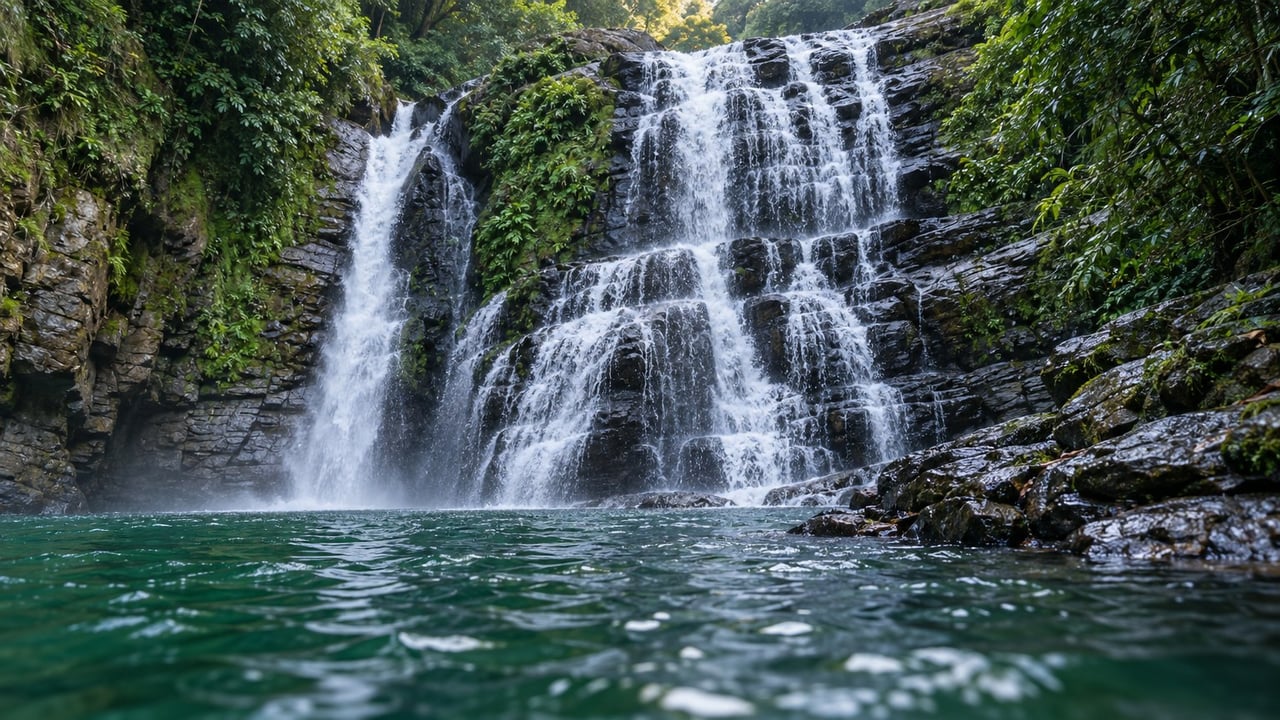
In 2020, drivers were sent the same way: Ruta 243, or San Isidro to Buenos Aires to Palmar Norte. Ruta 243 is the climbing road many locals know from trips to the waterfalls above Dominical, which we covered in our guide to Nauyaca's two entrances. When Coronado closes, that road carries traffic between the coast and the mountains. A missed appointment on the far side of the river can mean a trip that crosses the mountains twice.
What the new bridge will be, and how the plan changed
MOPT announced the replacement in March 2026, and its description has changed in three published updates since then:
| MOPT update | Length | Stated cost | Timing given |
|---|---|---|---|
| March 12, 2026 | 60 meters | $2.5 million | Start in May, 240 days of work |
| June 26, 2026 | 53 meters | $4,630,887.60 | Preliminary work from Monday, June 29 |
| September 14, 2026 | Not restated | $4.8 million | Construction under way since late June, 15% complete |
The stated length dropped from 60 to 53 meters between March and June. According to MOPT's June release, the finished bridge will have one lane in each direction and sidewalks on both sides, and it is expected to benefit more than 44,000 people. The Tico Times reported that the bridge was designed to handle future climate events. Financing comes from the Banco Centroamericano de Integración Económica through PROERI, the national emergency program for rebuilding infrastructure damaged by weather.
When the project was announced, Vice Minister of Infrastructure Pablo Camacho described what it should mean for the corridor. In Visible.cr's report, translated from Spanish:
"Construction is estimated to start next May. This work will change people's lives, guarantee road and pedestrian safety, and restore two-lane traffic, significantly improving mobility and travel times on this strategic route for the Southern Zone."
The new bridge adds sidewalks on both sides, something the single-lane Bailey bridge does not have.
The stage the work has reached
Under MOPT's plan, the old bridge cannot be demolished until traffic has somewhere else to go. Starting June 29, crews were to clear the site, move utility lines and place a modular structure parallel to the existing bridge so that vehicles and pedestrians could keep crossing.
MOPT's September 14 update put the project at 15% complete. It said the temporary crossing was scheduled to open on Wednesday, September 16, and that this was the step needed before demolition of the existing bridge could begin and construction of the new one could continue.
In MOPT's sequence, the permanent fix runs through a parallel modular crossing beside the work site, and two-lane traffic returns only when the new structure opens. Every closure so far started with a truck hitting the steel or rain undermining a support, and a modular crossing next to demolition work is exposed to both.
The wider work on Ruta 34
Coronado is one of nine Costanera projects that MOPT and CONAVI grouped in a September 30 release, worth $34,943,127 in total across the cantons of Garabito, Parrita, Quepos and Osa. The others matter to anyone driving north toward San José:
- Tárcoles and Caletas, Garabito: more than $19.3 million in slope stabilization, including a section 450 meters long and 18 meters high about 3 kilometers south of the Tárcoles bridge.
- Río Tárcoles bridge: rehabilitation valued at $6.7 million.
- Parrita: a $1.2 million bridge rebuild, plus 9.5 kilometers of drainage on the Parrita–Pocares sector.
- Río Savegre: repairs to two structures, totaling $1.4 million.
The same release lists the Coronado work as a $2.5 million "structural repair," which is lower than the $4.8 million in MOPT's project-specific update two weeks earlier. For a driver, the more useful point is that the whole Costanera is being worked on at once, so a trip from Ojochal to the Central Valley can pass several work zones in one day.
What sits on the far side of a closure
When Coronado closes, the Costanera between Uvita and Palmar Norte is cut, and several everyday services sit on that stretch:
- Hospital Tomás Casas Casajús, Ciudad Cortés. CCSS lists it as a Periférico 1 hospital, with phone lines 2786-8148 and 2786-4317.
- Municipalidad de Osa. The municipal website gives its address as 2.5 kilometers south of the hospital in Ciudad Cortés.
- Farmacia Ibarra, which the ICT's Osa guide lists with locations in Ojochal, Palmar Norte, Puerto Cortés, Uvita and Sierpe.
- TRACOPA buses, which list Ciudad Cortés, Palmar Norte and Sierpe among their stops on San José routes that run via the Costanera toward Golfito and Paso Canoas.
- The Palmar junction, with a BM supermarket and a large gas station before the turnoff to Sierpe, 17 paved kilometers away.
Ojochal has its own Farmacia Ibarra, which covers the pharmacy run during a closure. Hospital visits, municipal paperwork and long-distance buses all depend on this stretch of road staying open, and for six years that has meant a single-lane bridge at Coronado. The two-lane bridge with sidewalks is what ends that dependence, and MOPT's project updates are where its progress gets posted. Find more on daily life in the village in our Ojochal neighborhood guide.
At Blue Zone Realty International, we follow the Costanera the way our clients drive it, one crossing at a time. If you would like to talk about how access along Ruta 34 shapes life in Ojochal, or anywhere along the Costa Ballena, schedule a private consultation and we will share what we are seeing on the road.